You may pay your insurance premiums every month, but that does not mean the insurance company has your best interests in mind when you file a claim.
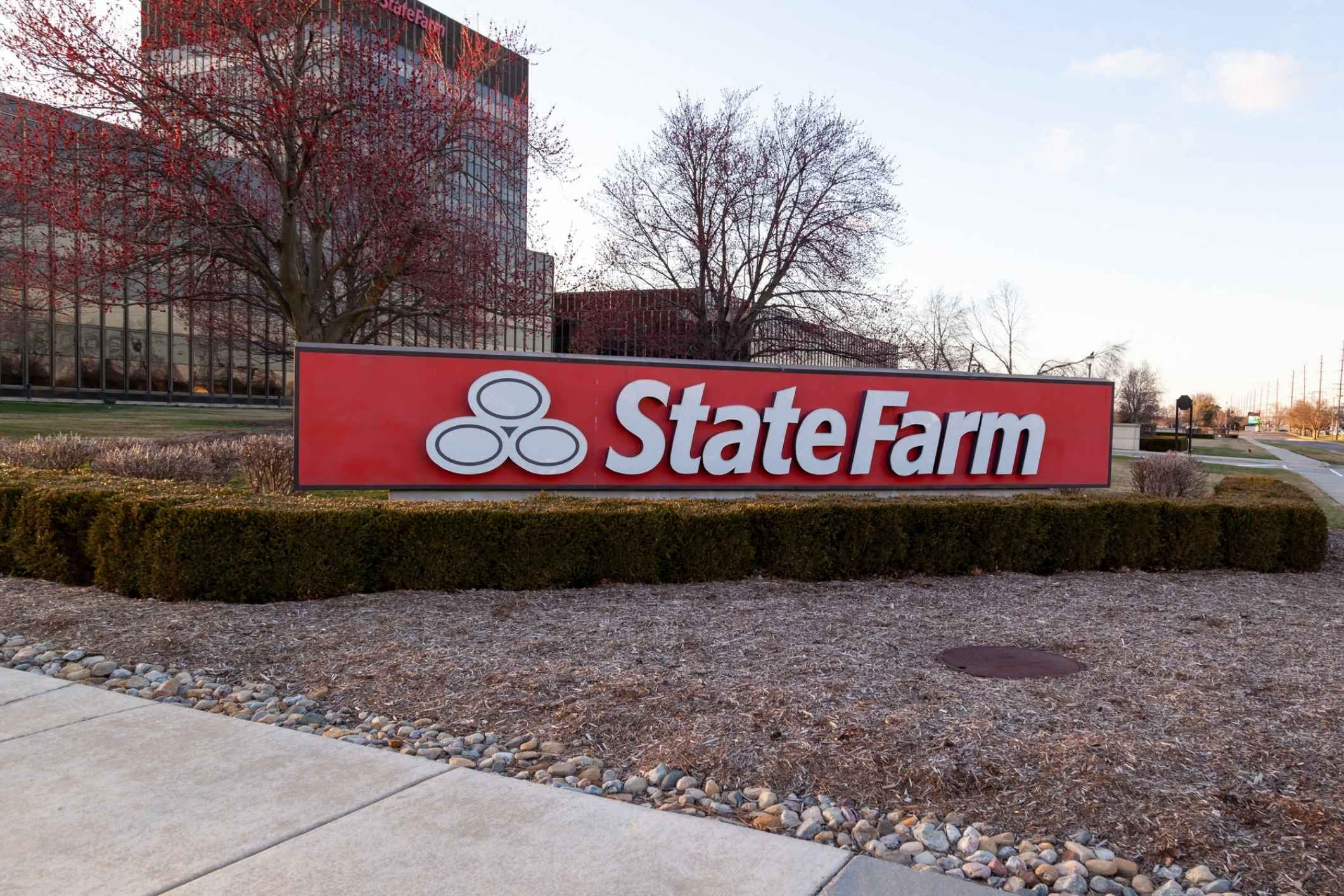
That point is getting renewed attention after a judge in Oklahoma ordered 31 previously protected State Farm documents to be made public.
The records contain internal emails and communications about the company's handling of wind and hail claims, including a reported $1.4 billion reduction in claim payments during the program's first full year. State Farm disputes the allegations and maintains that claims are evaluated individually based on the policy and facts of each loss.
For drivers and other accident victims, that raises a question worth asking before you accept an insurer’s decision: Is the insurance company evaluating what your claim is worth, or looking for ways to pay less?
The Documents Came From a Fight Over One Homeowners' Claim
The records became public through litigation brought by Oklahoma homeowners Neil and Lacy West against State Farm. The Wests allege that the company acted in bad faith when handling their claim after their home was damaged by hail.
Their case became significant because of the discovery battle surrounding it. State Farm produced more than 800,000 pages of documents during litigation. The company sought to keep the materials protected, arguing that some contained confidential business information and trade secrets.
The plaintiffs challenged those designations, arguing that State Farm had improperly treated its entire production as confidential.
On August 20, 2026, a district judge ordered 31 documents to be removed from the protective order. The documents included materials concerning State Farm's wind/hail initiatives, tracking of roof replacements and indemnity savings, and requirements for management approval of full roof replacements.
Inside State Farm’s Paper Trail: How Internal Emails Reveal an Alleged Push to Cut Payouts
The documents reportedly show State Farm executives tracking the results of a wind and hail claims initiative that plaintiffs' attorneys say was first tested in Dallas County in 2020 before expanding to other states.
One of the most frequently reported figures is the alleged $1.4 billion reduction in indemnity payments during the program's first full year.
Other emails reportedly showed a 39% “closed without payment” rate, along with an estimate that State Farm saved more than $15,000 on an average denied claim.
Plaintiffs' attorneys argue that these numbers show the company was measuring claims not only by whether damage was covered, but also by how much money could be saved by reducing payments.
State Farm disputes that interpretation.
State Farm Agents Reportedly Raised Questions, Too
The concerns described in the released documents did not come only from homeowners and their attorneys. Some State Farm agents reportedly raised their own questions about how wind and hail claims were being handled.
One 2021 email from Kentucky State Farm agent Tracy B. Haus to the company’s then-CEO and CFO reportedly warned that customers and longtime business partners were becoming increasingly frustrated with the claims process. Haus wrote that reputable companies that had worked with State Farm for years were now comparing the company unfavorably to other insurance companies.
That concern lines up with allegations about pressure inside the claims department. Referring to internal emails, attorney Hannah Whitten argued that adjusters could face pressure when they approved too many full roof replacements, describing a system in which another employee or manager could step in and question why an adjuster was approving so many roofs.
For anyone dealing with an insurance company after an accident, that distinction matters. A claims decision can affect your medical bills, lost income, property damage, and ability to move forward. It is worth asking not only what the insurer says your claim is worth, but how it arrived at that number.
What Does This Have to Do With Accident Claims?
The documents currently at the center of this controversy involve homeowners' wind and hail claims. They do not establish that State Farm handles every auto accident, motorcycle accident, or personal injury claim in the same way.
That is an important limitation.
But accident victims should still keep in mind what these documents allegedly reveal about the relationship between claims handling and a large insurer's financial interests.
After an accident, you may be dealing with an insurance company over medical expenses, lost income, or other losses. The company may assign an adjuster to your claim and conduct its own investigation.
The insurer has a reason to control its costs. You have a reason to make sure your losses are properly accounted for. Those two interests can sometimes point in different directions.
That is why an accident victim should not assume that an insurance company's valuation, settlement offer, or explanation is automatically correct simply because it comes from a large, familiar insurance brand.
Before accepting an early settlement offer, an accident victim should understand what it actually covers and whether it accounts for the full scope of the injury and losses.
Insurance companies are entitled to investigate claims and challenge claims they believe are unsupported. But you are not required to accept an insurer's assessment without asking questions or seeking legal advice.
Have Questions About Your Insurance Claim After an Accident? Reach Out to Osborne, Francis, & Pettis
Osborne, Francis & Pettis was founded in 2015 to provide thorough, personal representation to people going up against large corporations and other powerful entities.
Our firm represents injured Floridians in cases involving auto accidents, wrongful death, medical malpractice, and defective products, among other matters.
If an insurer has denied your claim, questioned your injuries, disputed responsibility, or made an offer you are unsure about, it may be worth having an attorney review the situation before you agree to anything.
Call Osborne, Francis & Pettis at (561) 293-2600 or fill out our online form to discuss your case.

.avif)

.svg)






.svg)
.svg)
.svg)
.svg)
.svg)